


How to File a Diminished Value Claim After a Car Accident in Spokane, Washington
March 15, 2026 – Matt Albrecht
A car accident in Spokane, Washington can leave you dealing with more than visible property damage. Even after repairs are complete, your vehicle may never be worth what it was before the auto accident. Buyers pay less for a car with an accident history, even if the repairs were flawless.
That loss in resale value is called diminished value.
Many people assume the insurance company automatically accounts for that loss. In reality, diminished value is rarely included unless you ask for it. If someone else’s negligence caused your car accident, you may have the right to file a diminished value claim as part of your broader car accident claim.
Here’s what you need to know about how to file a diminished value claim in Spokane, WA and how it fits into a Washington car accident case.
At a Glance
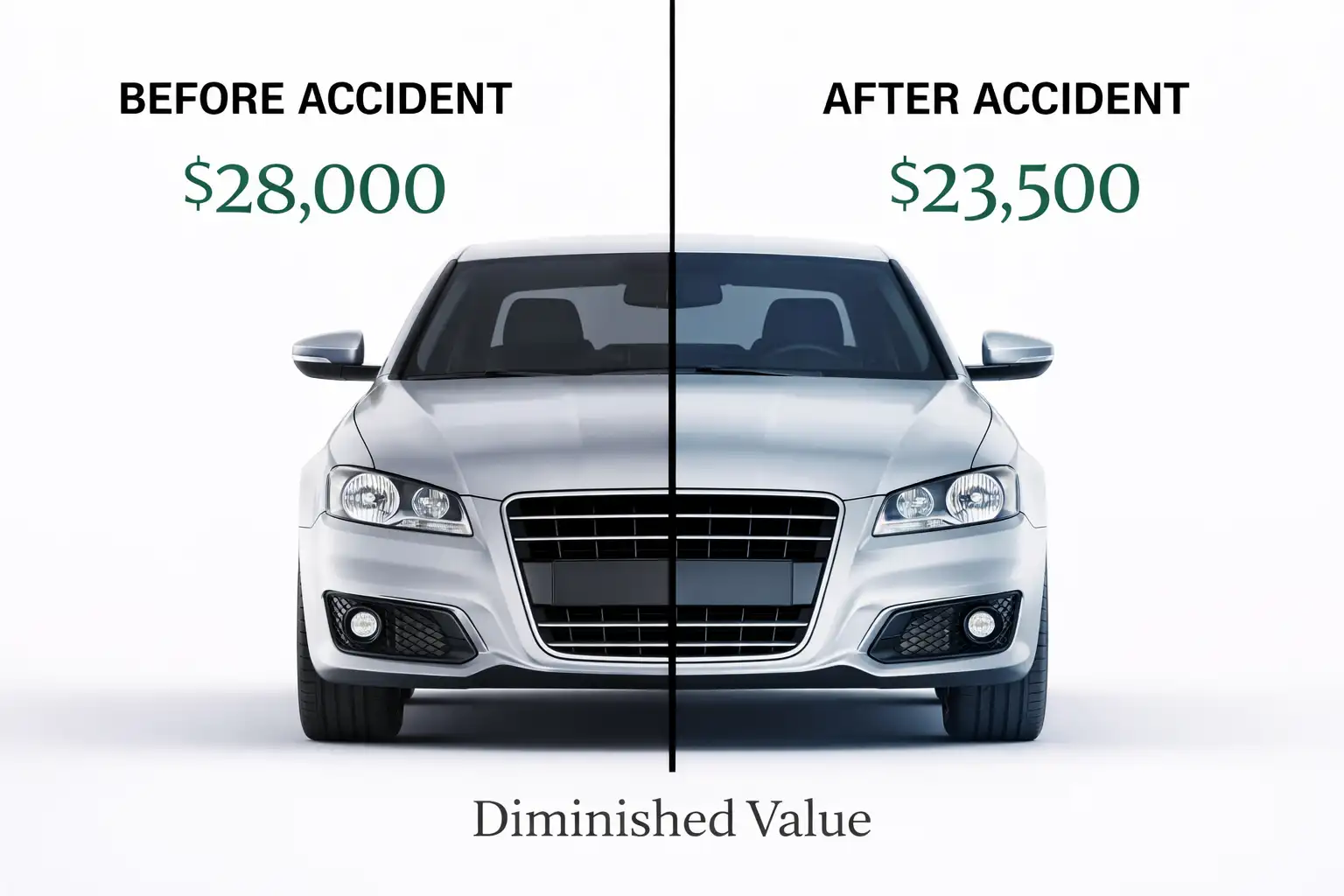
- Diminished value is the loss in your vehicle’s resale value after a car accident, even if repairs are complete.
- Washington State allows diminished value claims against the at-fault driver’s insurance company.
- Insurance companies often use internal formulas that may undervalue your claim.
- An independent appraisal can strengthen your negotiation position.
- Diminished value is separate from repair costs and may be pursued alongside a personal injury claim.
- You generally have three years from the date of the accident to file a property damage claim in Washington State.
- A Spokane personal injury lawyer can help protect both your injury claim and your vehicle’s lost market value.
What Is a Diminished Value Claim After a Car Accident?
A diminished value claim seeks compensation for the reduction in your vehicle’s market value after a car accident, even if the vehicle has been fully repaired.
In Washington State, the concept is straightforward:
Diminished value equals the difference between your car’s fair market value before the auto accident and its value after repairs.
There are three general types:
- Immediate diminished value: the difference in value immediately after the accident but before repairs
- Repair-related diminished value: loss due to incomplete or substandard repairs
- Inherent diminished value: the most common type, reflecting the stigma attached to a vehicle with an accident history
In Spokane personal injury cases involving vehicle damage, inherent diminished value is usually what people pursue.
Even if your car looks perfect, a vehicle history report will show the accident. That affects resale value. Insurance adjusters know this. Buyers know this. Dealers know this.
The question is whether the insurance company will compensate you fairly for it.
Consider this: a driver rear-ends your late-model SUV near downtown Spokane. Repairs are completed perfectly. But months later, when you try to trade it in, a dealership offers significantly less than comparable vehicles because the accident shows up on the vehicle history report. That gap is inherent diminished value, and it is real money out of your pocket.

Does Washington State Allow Diminished Value Claims?
Yes.
Washington is an at-fault state. If another driver breached a legal duty and caused your car accident, you can pursue a property damage claim against the negligent party’s insurance coverage.
That includes:
- Repair costs
- Loss of use
- Diminished value
You must still prove negligence. In most personal injury cases, that involves showing:
- The other driver owed you a legal duty
- They breached that duty
- Their actions caused the auto accident
- You incurred damages due to the negligent party’s actions
Washington State follows comparative fault rules. If liability is disputed, your financial compensation may be reduced by your percentage of fault.
The statute of limitations for most car accident and property damage claims in Washington State is generally three years from the date of the accident. Waiting too long can affect your ability to recover compensation.
What Types of Vehicles Experience the Greatest Diminished Value?
Not every car accident leads to significant diminished value. The impact depends on:
- The age of the vehicle
- Pre-accident condition
- Severity of the auto accident
- Whether structural damage occurred
- Whether airbags deployed
Luxury vehicles, newer vehicles, and vehicles with low mileage often experience greater market impact in Spokane, WA. Even minor accidents can affect resale value when buyers review vehicle history reports.
How to File a Diminished Value Claim in Spokane, WA
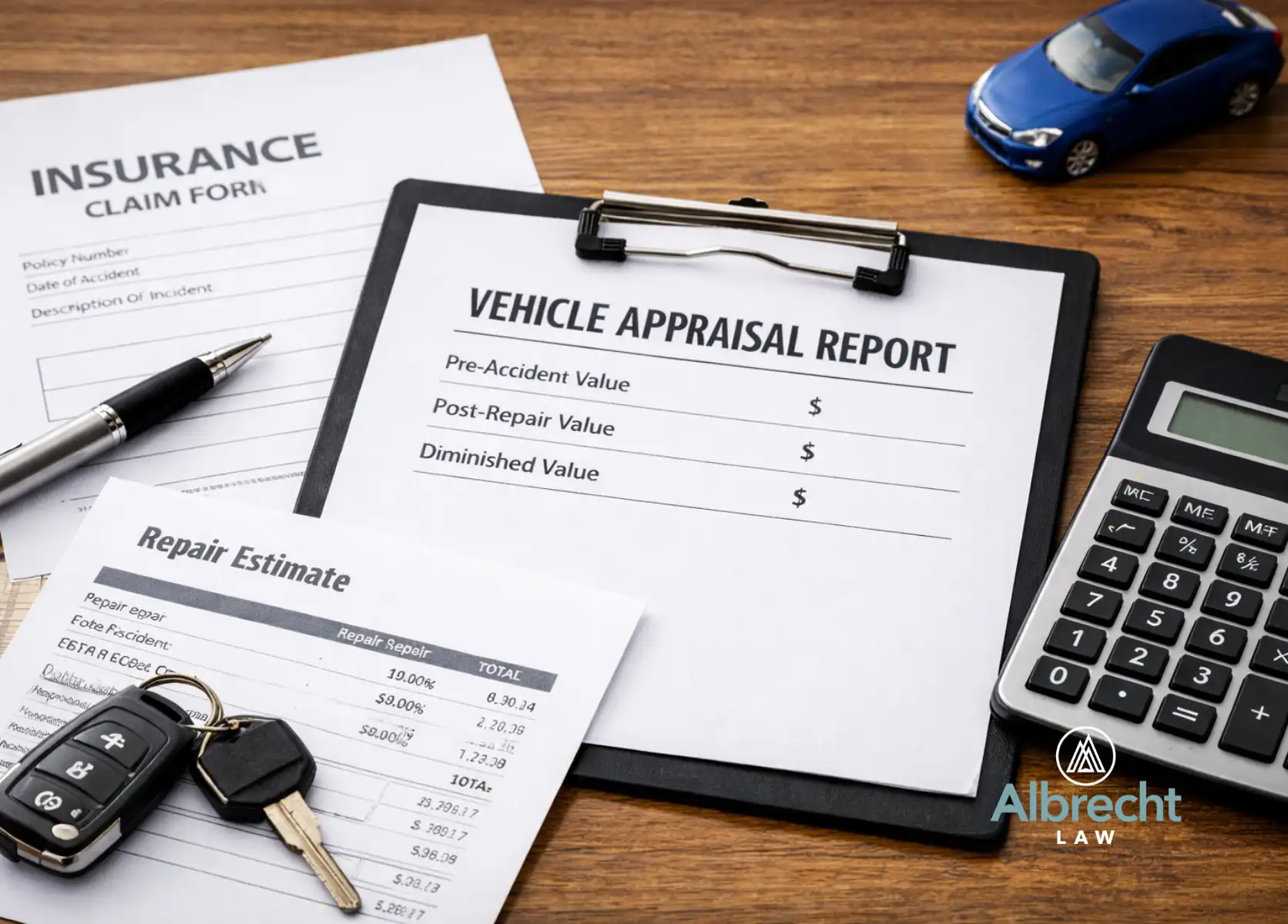
Filing a diminished value claim requires more than simply telling the insurance company your car is worth less.
Below is a step-by-step approach that protects your position.
Step 1: Confirm Liability in the Car Accident
Before pursuing diminished value, liability should be clear. If the other driver caused the auto accident, you typically pursue the claim through their auto insurance policy.
If fault is disputed, you may need to gather evidence to prove negligence.
Step 2: Complete All Repairs
Insurance companies will not evaluate diminished value until repairs are finished. Keep all invoices, repair estimates, and documentation related to the property damage.
Step 3: Obtain an Independent Diminished Value Appraisal
Insurance adjusters often rely on internal formulas that undervalue claims. An independent appraisal can provide:
- Pre-accident market value
- Post-repair market value
- A documented diminished value amount
This appraisal becomes the backbone of your demand.
Step 4: Prepare a Formal Demand to the Insurance Company
Your demand should include:
- The accident report
- Proof of liability
- Repair documentation
- Independent appraisal
- A clear calculation of diminished value
Request a specific amount supported by evidence and ask for a fair settlement.
Step 5: Negotiate with Insurance Adjusters
Insurance adjusters may:
- Offer a low initial amount
- Claim diminished value is minimal
- Suggest repairs restored full value
Diminished value is part of your property damage claim. It should not be dismissed simply because repairs were completed.
Step 6: Escalate if Necessary
If the insurance company refuses a reasonable amount, your options may include:
- Continued negotiation
- Mediation
- Filing a personal injury lawsuit that includes property damage
- Consulting a Spokane personal injury lawyer

How Insurance Companies Calculate Diminished Value — and Why Their Number Is Often Too Low
Insurance companies don’t simply look at repair bills and call it a day. They use established valuation practices and internal formulas to estimate how much your vehicle’s resale value dropped because it has an accident history, even if it looks perfect on the outside.
Here’s how the process typically works, based on the same valuation logic for consumer car values that experts use (like Kelley Blue Book) and the common insurer approach:
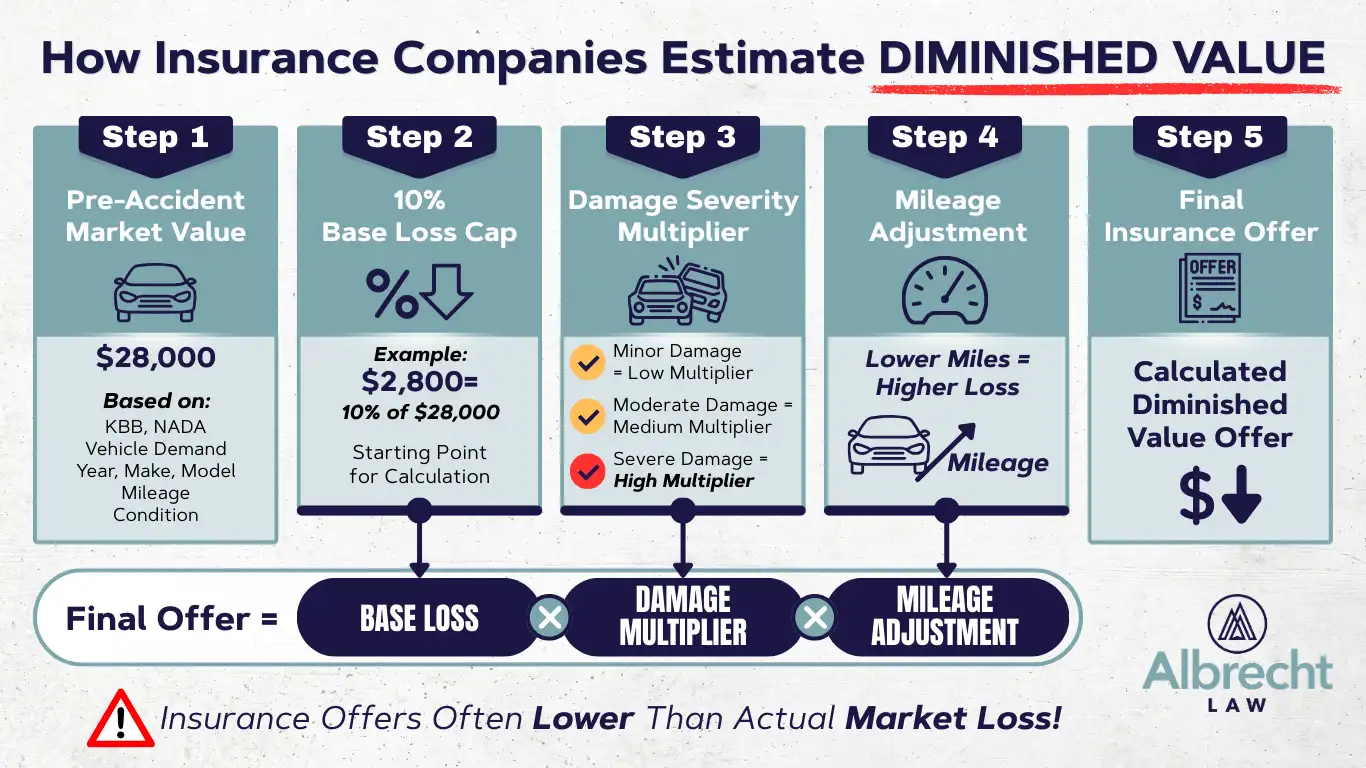
1. Determine Your Car’s Pre-Accident Market Value
The first step is to identify what your vehicle was worth before the accident. Reliable value guides like Kelley Blue Book (KBB) or NADA take into account factors such as:
- Year, make, and model
- Mileage
- Overall condition before the crash
These industry tools estimate what a typical buyer would pay for your car without any accident history. This figure becomes your baseline value.
2. Insurance Applies a “Base Loss Value”
Many insurance companies start with a rough cap on what they are willing to calculate as diminished value. One common benchmark is 10% of the pre-accident value, which forms the base loss value used in internal calculations.
For example, if your vehicle was worth $30,000 before the accident, the base loss value would be $3,000.
3. Apply a Damage Severity Multiplier
From that base loss value, adjusters often apply a damage severity multiplier that reflects how extensive the physical damage was:
- Minor panel damage → lower multiplier
- Structural damage → higher multiplier
- Severe frame damage → highest multiplier
The idea is that greater structural impact typically creates a larger stigma in the resale market.
4. Factor in Mileage and Condition
Mileage and general condition matter too. A vehicle with low miles and excellent condition is more vulnerable to diminished value loss than a high-mileage car because potential buyers care more about accident history on a newer, nicer vehicle. Insurers adjust their offers downward for vehicles with more miles or pre-existing wear.
5. The Formula Insurers Often Use
Many insurance companies use a variation of a standardized method sometimes referred to as the “17c formula.” Under this approach:
- Start with 10% of the pre-accident value;
- Apply a damage severity multiplier;
- Apply a mileage or condition multiplier.
This calculation produces the insurer’s internal estimate of diminished value, which often falls below the actual market loss a diligent appraisal would show.
This formula is widely referenced in consumer guides and insurer claim processes, but it isn’t the only way to quantify diminished value. Many legal experts and valuation professionals will argue that a professional, independent appraisal often gives a more accurate reflection of what the actual loss would look like in the real marketplace.
What this Means for Your Claim
The insurer’s internal calculation often becomes the starting point, not the finish line.
- Their base loss cap may be artificially low
- Multipliers are subjective
- Mileage adjustments may undervalue the true market impact
A strong claim compares what the insurance company used with what an independent appraisal or third-party market tools (like KBB condition ratings) indicate your vehicle is worth today. That comparison gives you leverage in negotiation and a clearer understanding of the full diminished value you may seek to recover.
The infographic below illustrates the process:
Common Mistakes That Can Reduce Your Diminished Value Recovery
After a car accident in Spokane, Washington, many people assume the insurance company will handle everything fairly. That assumption can reduce your recovery.
Common mistakes include:
- Accepting the first offer from insurance adjusters
- Failing to have an independent appraisal
- Selling the vehicle before documenting diminished value
- Not gathering evidence about the vehicle’s pre-accident condition
- Overlooking diminished value while focusing only on medical bills and personal injuries
In many personal injury cases, property damage and injury claims move forward at the same time. If diminished value is not raised early, it can be forgotten during settlement discussions.
How Liability Disputes Can Affect a Diminished Value Claim
In Washington State, you must prove negligence to be able to recover compensation for property damage.
If the negligent party denies fault, diminished value may be delayed or denied until liability is resolved. Comparative fault arguments may reduce potential financial compensation.
When liability becomes complicated, legal assistance can help strengthen your position before negotiations continue.
Does Diminished Value Apply to Leased or Financed Vehicles?
If your car is leased or financed, diminished value can still matter. Even though a lender or leasing company holds an interest in the vehicle, you may still suffer financial consequences if the vehicle’s market value drops after an auto accident.
Review your auto insurance policy and financing documents carefully. In some situations, lenders pursue claims directly. In others, vehicle owners must initiate the property damage portion of the car accident claim.
This can be especially important for Spokane residents facing financial challenges after serious injury or medical treatment.
How Diminished Value Fits Into a Broader Spokane Personal Injury Claim
A diminished value claim addresses property damage, but most personal injury claims involve more. After a serious car accident in Spokane, Washington, you may also face:
- Medical bills
- Medical expenses
- Lost wages
- Emotional distress
- Economic damages (calculable financial losses such as medical costs and lost income) and non-economic damages (harder-to-quantify losses such as pain and suffering)
In severe injury cases, potential compensation may include long-term medical treatment and financial support.
In wrongful death claim situations, surviving family members may pursue a wrongful death claim for financial and emotional losses.
While diminished value focuses on the vehicle, it often exists alongside personal injuries. A comprehensive approach seeks full compensation for all losses caused by the negligent party.
Why Diminished Value Is Often Overlooked in Spokane Personal Injury Cases
In many personal injury cases, attention centers on serious injury, medical expenses, and lost wages. Property damage may feel secondary.
However, maximum compensation includes all financial losses caused by someone else’s negligence. If diminished value is ignored, that portion of the loss may never be recovered.
An experienced attorney evaluates the entire claim, including vehicle loss, economic damages, and non-economic damages.
When to Contact a Spokane Car Accident Lawyer
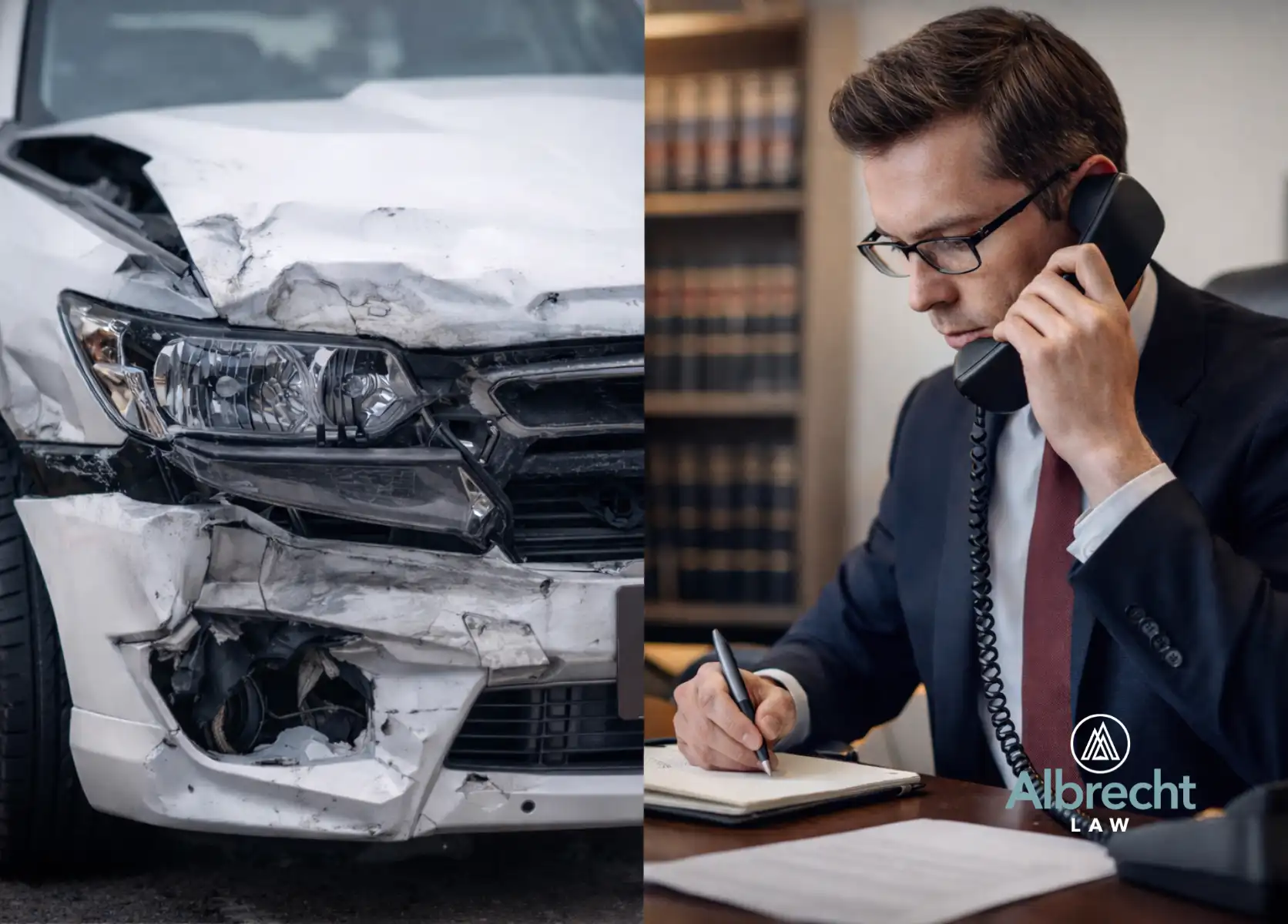
You may benefit from legal representation if:
- The vehicle has significant value
- The insurance company refuses a fair settlement
- Liability is disputed
- The accident also caused severe injuries
- You are facing medical bills, lost wages, and ongoing financial challenges
A Spokane personal injury lawyer understands how diminished value interacts with personal injury law and insurance negotiation.
At Albrecht Law, our legal team represents injured victims throughout Eastern Washington. Our law firm handles auto accident claims involving:
- Head on collisions
- Motorcycle accidents
- Bicycle accidents
- Slip and fall accidents
- Dog bites
- Brain injuries
- Wrongful death
If someone else’s negligence caused your car accident, you should not have to absorb the financial loss.

Frequently Asked Questions
Q: Can I file a diminished value claim with my own insurance company?
A: Generally, diminished value claims are pursued against the negligent party’s auto insurance policy. However, if the at-fault driver was uninsured or underinsured, you may be able to pursue a claim through your own uninsured/underinsured motorist property damage coverage. Review your policy carefully or consult a Spokane car accident lawyer to understand your options.
Q: How long do I have to file a diminished value claim in Washington State?
A: The statute of limitations is typically three years from the date of the auto accident.
Q: Do I need an independent appraisal?
A: While not legally required, an appraisal significantly strengthens your position.
Q: Can I include diminished value in a personal injury lawsuit?
A: Yes. If negotiations fail, diminished value may be included alongside other damages.
Q: Is diminished value automatic?
A: No. Insurance companies rarely volunteer payment unless you request it and provide documentation.
Protect Your Injury Claim and Your Vehicle’s Value After a Spokane Car Accident
After a car accident in Spokane, Washington, you may be dealing with medical treatment, repair delays, and ongoing calls from the insurance company. At the same time, your vehicle may have lost value, even after repairs are complete. Both issues matter.
A Spokane personal injury lawyer at Albrecht Law PLLC can review how your injury claim and property damage claim are being handled, evaluate whether diminished value has been properly addressed, and help you avoid accepting a settlement that overlooks part of your financial loss.
During your free consultation, you can ask questions about fault, insurance coverage, medical bills, lost wages, and how diminished value fits into your broader car accident claim. Our team understands that recovery is not just about repairing a vehicle. It’s about securing fair compensation for personal injuries, economic damages, and long-term financial impact.
If you’ve been searching online for “car accident injury lawyers near me” or a “lawyer for a car accident,” you’re likely looking for clear guidance and experienced legal representation. Albrecht Law PLLC represents injured people throughout Spokane County and Eastern Washington with careful preparation and individualized attention.
Founding Attorney Matt Albrecht has argued cases before the Washington State Supreme Court, and that appellate experience informs the strategy we bring to each case, whether negotiating with insurance adjusters or preparing for litigation.
Call (509) 495-1246(509) 495-1246 to schedule your free consultation. There is no fee for the initial meeting and no attorney’s fees unless we collect a recovery for you. You may also contact the firm through our confidential online form if more convenient.
Albrecht Law PLLC – Our Clients Are More Than Just Cases
Copyright © 2026. Albrecht Law PLLC. All rights reserved.
The information in this blog post (“post”) is provided for general informational purposes only and may not reflect the current law in your jurisdiction. No information in this post should be construed as legal advice from the individual author or the law firm, nor is it intended to be a substitute for legal counsel on any subject matter. No reader of this post should act or refrain from acting based on any information included in or accessible through this post without seeking the appropriate legal or other professional advice on the particular facts and circumstances at issue from a lawyer licensed in the recipient’s state, country, or other appropriate licensing jurisdiction.
Albrecht Law PLLC
5105 E. 3rd Avenue, Suite 101
Spokane Valley, WA 99212
(509) 495-1246(509) 495-1246
https://albrechtlawfirm.com/
Schedule A Free
Consultation Today
No Fee Unless You Win
Call (509) 495-1246(509) 495-1246, or fill out the short form. Don’t hesitate, your questions are welcome.
Required Fields*
Your Information Is Safe With Us
For more information on how your data will be handled, Please Visit Privacy Policy. The information you provide will be used to answer your question or to schedule an appointment if requested.
Related Blog Posts
What Are the Pros and Cons of a Dash Cam in Spokane, Washington?
Each time you get behind the wheel, you hope to reach your destination without incident. Unfortunately, a moment of distracted driving, poor road conditions, or another driver’s mistake can change…
Injured in a Truck or 18-Wheeler Accident in Spokane, WA? Evidence, Liability, and How to Protect Your Claim
The collision lasted only seconds, but the consequences continue long after the vehicles leave the highway. Pain interferes with sleep and work, medical appointments consume your time, and bills arrive…
How to File an Allstate Accident Claim After a Car Crash in Spokane, WA
A car accident sets off a chain of events that doesn’t stop once you leave the scene. Medical appointments pile up, bills start arriving, and calls from the insurance company…
Can You Sue Someone for a Car Accident in Spokane, Washington?
The insurance company already has a number in mind. You may have seen it sooner than you expected, through a call, an email, or a check that feels low compared…