


Understanding the Car Accident Recovery Process in Spokane, Washington
October 15, 2025 – Matt Albrecht
One moment you’re driving through Spokane on your way to work, school, or the grocery store. The next moment, a distracted driver runs a red light, and everything changes. In an instant, you may be facing car accident injuries, mounting medical bills, and emotional distress that leaves you uncertain about what to do next.
Recovery after a car accident is rarely straightforward. It involves taking care of your health, protecting your emotional wellbeing, and finding a way to manage financial challenges. On top of this, you may need to deal with the insurance company, file a personal injury claim, and seek compensation from the negligent party under Washington law.
This blog outlines what you need to know about car accident recovery in Spokane. From the immediate steps you should take at the accident scene to the long-term legal and financial issues that follow, these insights can help you better understand the process of rebuilding your life after a crash.
Your Immediate Health and Safety Come First
The first minutes and hours after a crash can be confusing and stressful. Yet the steps you take right away can protect your health and create important records if you later need to file a claim.
Call 911 and Involve Law Enforcement
Under Washington law, you must stop and exchange information after a crash that involves injuries or property damage (RCW § 46.52.020). Calling 911 ensures that police respond and create a police report. This report provides details about the accident scene, witness statements, and officer observations.
Seek Medical Attention Right Away
Even if you “feel fine,” you should seek medical care immediately. Common car accident injuries such as concussions, whiplash, or internal bleeding may not present symptoms right away. Prompt treatment creates a medical record that links your injuries directly to the crash. Delaying care not only jeopardizes your health but also gives the insurance company room to dispute your claim.
Gather Evidence at the Accident Scene
If you’re able, document as much as possible before leaving the accident scene:
- Take photos of vehicle damage, skid marks, and traffic signals.
- Record the contact details of witnesses.
- Write down your version of events while it is fresh in your mind.
If your injuries prevent you from collecting this information, a police report and follow-up investigations can help fill in the gaps later.
What Not to Do at the Scene
In the confusion after a crash, it’s easy to say or do something that later complicates recovery. A few common mistakes to avoid include:
- Do not admit fault, even casually. A simple statement like “I’m sorry” can be misinterpreted as an admission of liability. Let the investigation and police report establish what happened.
- Do not speculate about injuries or damages. If asked, stick to facts. Saying “I’m fine” or guessing at the extent of property damage can be used against you later if injuries or issues surface after the accident.
- Do not refuse medical care. Even if you think your injuries are minor, declining medical attention may leave gaps in your records and allow the insurance company to argue that your injuries were unrelated.
- Avoid posting about the accident on social media. Photos or comments online can be taken out of context and may harm your ability to recover compensation if you later file a claim.
- Do not argue with the other driver. Keep communication brief, exchange necessary information, and let law enforcement handle disputes.
Avoiding these mistakes at the scene and in the days that follow gives you a stronger foundation for recovery. From there, the focus often shifts to the three main pillars of recovery: physical, emotional, and financial.

1. Caring for Your Physical Recovery

After a Spokane car accident, your body often carries the heaviest burden. Healing is not always straightforward. Some injuries fade in weeks, while others require months of medical care or leave permanent effects that change your daily life. Knowing what to expect physically can help you make decisions that support both your health and your long-term recovery.
Common Car Accident Injuries
The type of injuries you may face often depends on the nature of the crash. Some of the most common include:
- Soft-tissue injuries. Sprains, strains, and whiplash are frequent in rear-end collisions and can cause lasting stiffness and pain.
- Broken bones. Fractures may require surgery, physical therapy, and time away from work.
- Spinal cord injuries. These range from herniated discs to paralysis, sometimes leading to permanent disability.
- Traumatic brain injuries (TBIs). Concussions and more serious TBIs may affect memory, concentration, mood, or balance.
- Internal injuries. Damage to organs or internal bleeding may not be visible at first but can be life-threatening without prompt care.
Recovery Timelines and Challenges
Every injury heals differently.
- Minor injuries may improve within weeks, but they often still require physical therapy.
- More severe injuries can involve multiple surgeries, long rehabilitation periods, and lifestyle adjustments.
- Permanent disability may force changes to your career or daily independence.
During this time, consistent medical care is vital. Following treatment plans, attending appointments, and documenting your progress not only supports your health but also creates a clear record of the toll the accident has taken.
Keeping Track of Your Recovery
Many accident victims find it helpful to keep a pain journal. Writing down your pain levels, mobility challenges, and how your injuries affect daily life provides two benefits:
- It helps you and your doctors monitor progress or setbacks in your healing.
- It creates a personal record that can support claims for medical expenses, lost wages, or compensation for pain and suffering if you pursue a personal injury claim.
Physical recovery can feel slow and frustrating, but each step, from following medical advice to documenting your challenges, helps you build a foundation for long-term healing.
2. Taking Care of Your Emotional Wellbeing
While broken bones or visible injuries may draw immediate attention, the emotional toll of a car accident often lingers long after the physical wounds start to heal. Many accident victims find that the hardest part of recovery is not the medical treatment, but the emotional impact that follows. Family members may also feel the strain as they cope with new responsibilities or changes in household routines.
Common Emotional Challenges After a Car Accident
Emotional recovery looks different for everyone, but some common struggles include:
- Post-traumatic stress disorder (PTSD). Flashbacks, nightmares, or heightened anxiety can make it difficult to feel safe on the road again.
- Depression or anxiety. Feelings of hopelessness, irritability, or constant worry may interfere with work, relationships, and daily activities.
- Family strain. Spouses, children, or other relatives may experience stress as they step into caregiving roles or adjust to financial pressures.
- Grief. In wrongful death accidents, families may face overwhelming sorrow while also handling practical matters related to their loss.
Steps Toward Emotional Recovery
Emotional healing requires time and intentional care. Some strategies that may support your recovery include:
- Counseling or therapy. Working with a licensed professional can provide coping strategies and create a safe space to process trauma.
- Support networks. Rely on family, friends, faith communities, or peer groups who understand what you are experiencing.
- Gradual exposure. Some accident victims regain confidence by slowly reintroducing themselves to driving or traveling in cars.
- Self-care practices. Adequate sleep, proper nutrition, and relaxation techniques such as meditation or journaling can support overall wellbeing.
- Open communication. Talking with loved ones about your struggles can reduce isolation and build stronger emotional support at home.
When Documentation Matters
Keeping track of how an accident has affected your mental health, whether through counseling notes, a personal journal, or support group attendance, can be valuable. These records help you and your care providers monitor progress, and they may also be useful if you later decide to pursue compensation for emotional distress as part of a legal claim.
Even if you never file a case, acknowledging the emotional impact and taking steps to heal is an important part of regaining stability after a Spokane car accident.
3. Addressing Financial Strain

For many accident victims, the financial impact begins almost immediately. An ambulance ride, emergency treatment, or even a short hospital stay can leave you with unexpected bills. If your injuries keep you out of work, the loss of income adds to the stress. Even when insurance is involved, the process of paying for medical care and repairing property can be complicated.
Common Financial Challenges
- Medical bills. Emergency care, hospital stays, surgery, and rehabilitation can add up quickly. Even with health insurance, deductibles and copays can strain your budget.
- Lost wages. If your injuries prevent you from working, missing even a few weeks of paychecks can affect rent, utilities, or other obligations.
- Property damage. Vehicle repairs or replacement costs can be substantial, and disputes often arise about the value of your car or belongings.
- Ongoing expenses. Physical therapy, prescription medication, or adaptive equipment may be needed long after the initial accident.
Steps to Manage the Financial Impact
There are actions you can take to regain a sense of control:
- Keep all records. Save medical bills, receipts for prescriptions, and repair estimates. These documents help you understand the true cost of your recovery.
- Communicate with providers. Some hospitals or clinics may offer payment plans or temporarily hold accounts if they know you are waiting on insurance.
- Check your insurance carefully. Auto and health insurance policies sometimes overlap, and you may have more coverage options than you realize.
- Track lost income. Keep copies of pay stubs or employer notes showing missed work due to your injuries.
Pursuing Compensation
Not every car accident leads to a legal claim, but if your financial strain stems from someone else’s negligence, you may have the right to seek compensation. In Washington, accident victims can pursue payment for medical expenses, lost wages, and other costs by filing a claim with the responsible party’s insurance company.
If you choose to explore this option, the records you have already gathered (i.e., medical records, receipts, and wage statements) become the foundation for showing the full scope of your financial challenges.
Even if you never file a lawsuit, taking these steps helps you manage expenses and prepare for whatever direction your recovery takes.

The Legal Process
Not every accident leads to a lawsuit. Many people recover physically, handle repairs through insurance, and move on. But if your injuries, lost wages, or medical expenses begin to overwhelm you, it may be worth understanding how Washington’s legal process works and what options are available for seeking compensation.
Statute of Limitations in Washington
If you decide to pursue a legal claim, Washington law gives you three years from the date of the accident to file most personal injury lawsuits (RCW § 4.16.080). Missing this deadline means you may lose the ability to seek compensation through the courts. Even if you are not sure about filing, it helps to be aware of this timeframe.
Filing a Claim With Insurance
Most accident recoveries begin with insurance. Depending on the situation, you may file a claim through:
- Your own auto insurance policy.
- The at-fault driver’s insurance company.
- Health insurance, if medical treatment is required.
These claims can cover medical expenses, property damage, or lost wages, but the process is rarely simple. Insurance adjusters often try to minimize payouts or deny claims outright.
Evidence That Strengthens a Claim
Whether you’re working only with insurance or considering legal action, documentation matters. Strong evidence may include:
- Police reports detailing the accident scene.
- Medical records showing diagnosis and treatment.
- Witness statements.
- Photos of vehicle damage or injuries.
- Records of lost income or reduced earning ability.
When Negotiations Stall
Sometimes, insurance offers are far below what it will take to cover your expenses. At that point, some accident victims decide to hire Spokane accident attorneys and file a personal injury lawsuit. While many cases still settle before trial, the willingness to pursue litigation can motivate insurance companies to negotiate more fairly.
Comparative Fault in Washington
Washington follows a comparative negligence system (RCW § 4.22.005). This means your potential compensation is reduced if you share some responsibility for the accident. For example, if your damages total $100,000 but you are found 20% at fault, your recovery would be reduced to $80,000.
Making the Choice That Fits Your Recovery
The decision to file a personal injury claim is deeply personal. Some people choose not to pursue legal action, while others find it necessary to recover the costs of ongoing care or lost earning capacity. Understanding how the system works gives you the knowledge to make the decision that is best for you and your family.
Unfortunately, not every accident allows for personal recovery. In those cases, Washington law provides a path for families to seek justice through wrongful death claims.

Wrongful Death Claim

Some car accidents bring the most painful loss of all — the death of a loved one. No amount of financial compensation can replace a family member, but Washington law does provide a way for families to seek accountability when someone else’s negligence causes a fatal crash.
Who Can File a Wrongful Death Claim
Under Washington’s wrongful death statute (RCW § 4.20.010), a wrongful death action is typically filed by the personal representative of the deceased person’s estate. The claim is brought on behalf of surviving family members, which may include:
- A spouse or state-registered domestic partner
- Children or stepchildren
- In some cases, parents or siblings if no spouse, partner, or children exist
Types of Losses Families May Face
Beyond the emotional grief, families often struggle with immediate and long-term practical challenges:
- Funeral and burial expenses. These costs can be significant and unexpected.
- Loss of financial support. Families may lose the income their loved one contributed to the household.
- Loss of guidance and companionship. The absence of a parent, spouse, or child can leave a lasting void in daily life.
- Household impact. Tasks and responsibilities once handled by the deceased may now fall on others, creating both financial and emotional strain.
Why Families Consider Legal Action
Filing a wrongful death claim is not mandatory, and many families choose not to pursue one. For others, a claim provides both financial stability and a measure of accountability against the negligent party. It can cover costs like medical bills incurred before death, funeral expenses, and the long-term financial and emotional support the family has lost.
Balancing Grief and the Legal Process
The decision to take legal action while grieving can feel overwhelming. Families should know that wrongful death cases often take time, and the process may involve gathering evidence, reviewing medical records, and negotiating with insurance companies. For some, pursuing a claim provides a sense of justice and the means to move forward; for others, focusing on emotional healing comes first. Both paths are valid.
Building a Path Toward Long-Term Recovery
Car accident recovery does not end once the stitches are removed or the car is repaired. For many people in Spokane, the real challenge begins in the weeks and months after the crash, when medical appointments continue, bills arrive, and emotional strain lingers. Long-term recovery is about piecing these parts together in a way that helps you regain stability and plan for the future.
Staying Consistent with Medical Care
Some injuries require follow-up treatment for months or years. Sticking with therapy, rehabilitation, or specialist care may feel exhausting, but it often makes the difference between partial recovery and the fullest healing possible. Keeping copies of medical records and documenting your progress also helps you track how far you’ve come and what care you may still need.
Supporting Emotional Wellbeing Over Time
Emotional recovery does not follow a straight timeline. Some accident victims may return to their routines quickly, while others continue to battle anxiety, sleep problems, or depression months later. Checking in with mental health providers, journaling, and leaning on trusted support systems can keep the healing process moving forward. Families may also benefit from counseling as they adjust to new roles or responsibilities.
Managing Ongoing Financial Pressures
Even after the initial bills are paid, financial strain can continue. Adaptive equipment, lost earning capacity, or reduced hours at work may all affect your stability. Creating a system for tracking expenses and income loss helps you see the full picture. If bills are overwhelming, some people explore payment plans or financial counseling in addition to possible legal options.
Knowing When Legal Options May Help
Not every accident leads to a claim, but if your recovery involves significant medical expenses, permanent disability, or loss of a family member, Washington law provides a way to pursue compensation from the negligent party. Whether through an insurance claim or a lawsuit, the records you’ve kept form the foundation of any legal action you may decide to take.
Combining All Parts of Recovery
Long-term recovery blends physical healing, emotional resilience, financial stability, and, for some, legal resolution. No two recovery paths look the same. What matters is that you give yourself the tools and resources to move forward, whether that means continuing medical treatment, seeking therapy, negotiating with insurance, or speaking with a Spokane car accident attorney.
These elements often overlap, and seeing them side by side can make it easier to understand how they support each other. The infographic below outlines the three main pillars of recovery after a Spokane car accident.
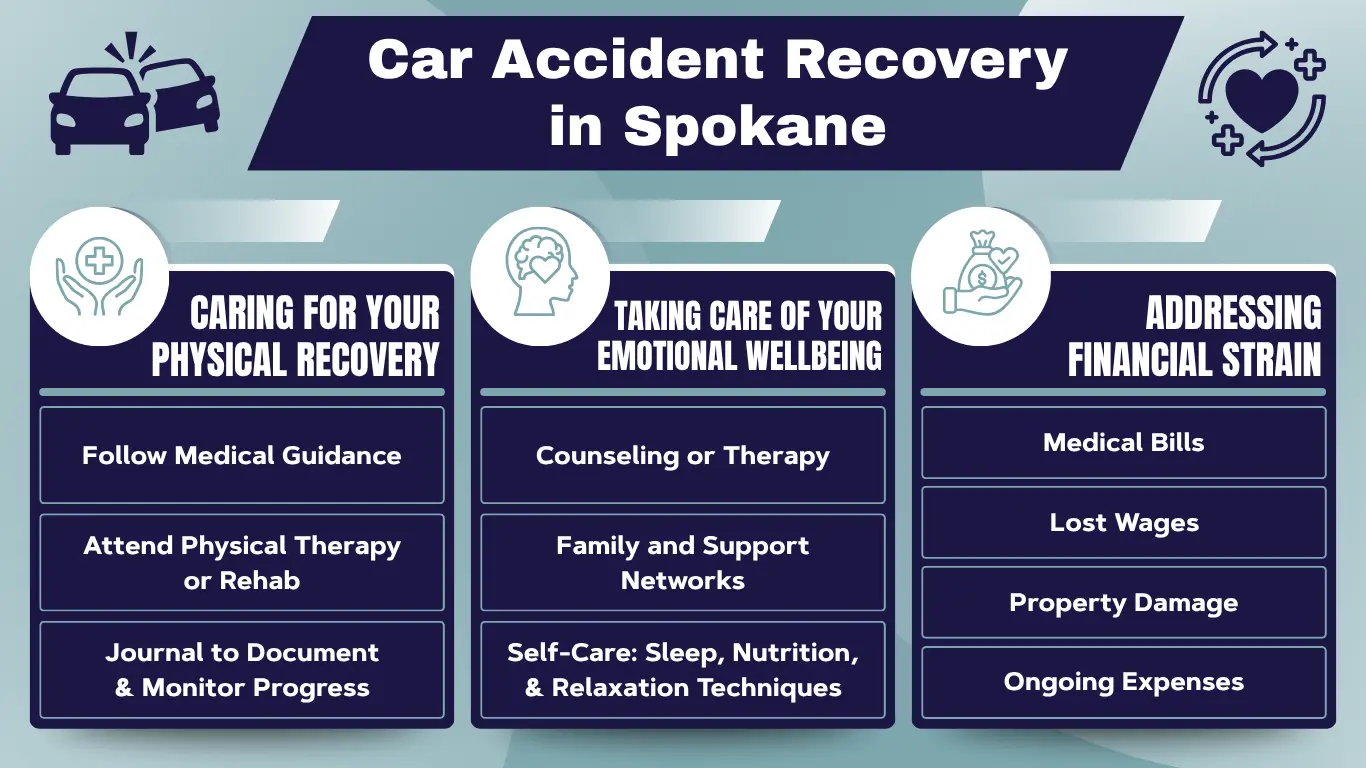
Supporting Every Part of Your Recovery After a Spokane Car Accident
Long-term recovery after a Spokane car accident is about more than medical bills or car repairs. It’s about finding stability in your health, your family life, and your finances. At Albrecht Law PLLC, we understand how overwhelming these challenges can feel, and we’re committed to guiding accident victims with the legal representation needed to protect their rights.
When you’re searching online for a “lawyer for a car accident” or an “auto accident law firm near me,” you want a team that understands Washington law and knows how insurance companies operate. At Albrecht Law PLLC, our Spokane attorneys bring that knowledge to every case, combining courtroom experience with a commitment to protecting accident victims at every stage of recovery.
Founding attorney Matt Albrecht has written extensively on Washington insurance law and argued cases before the Washington State Supreme Court, giving our firm the insight needed to build strong cases.
If you’re facing the physical, emotional, or financial challenges of recovery after a Spokane car accident, get the help you need and reach out today. Call (509) 495-1246(509) 495-1246 or complete our confidential online form to schedule your free case evaluation.
Albrecht Law PLLC — Our Clients Are More Than Just Cases
Copyright © 2025. Albrecht Law PLLC. All rights reserved.
The information in this blog post (“post”) is provided for general informational purposes only and may not reflect the current law in your jurisdiction. No information in this post should be construed as legal advice from the individual author or the law firm, nor is it intended to be a substitute for legal counsel on any subject matter. No reader of this post should act or refrain from acting based on any information included in or accessible through this post without seeking the appropriate legal or other professional advice on the particular facts and circumstances at issue from a lawyer licensed in the recipient’s state, country, or other appropriate licensing jurisdiction.
Albrecht Law PLLC
5105 E 3rd Ave Ste 101
Spokane Valley, WA 99212
(509) 495-1246(509) 495-1246
https://albrechtlawfirm.com/
Schedule A Free
Consultation Today
No Fee Unless You Win
Call (509) 495-1246(509) 495-1246, or fill out the short form. Don’t hesitate, your questions are welcome.
Required Fields*
Your Information Is Safe With Us
For more information on how your data will be handled, Please Visit Privacy Policy. The information you provide will be used to answer your question or to schedule an appointment if requested.
Related Blog Posts

Should I Get a Lawyer for a Minor Car Accident in Spokane, Washington?
The damage looks minor. You exchanged insurance information, took a few photos, and drove away. No ambulance, no drama. So why does something feel off? The stiffness in your neck…
How to File a Diminished Value Claim After a Car Accident in Spokane, Washington
A car accident in Spokane, Washington can leave you dealing with more than visible property damage. Even after repairs are complete, your vehicle may never be worth what it was…
Injured in a Truck or 18-Wheeler Accident in Spokane, WA? Evidence, Liability, and How to Protect Your Claim
The collision lasted only seconds, but the consequences continue long after the vehicles leave the highway. Pain interferes with sleep and work, medical appointments consume your time, and bills arrive…
Albrecht Law PLLC Secures Major Appellate Victory in a Personal Injury Case
SPOKANE VALLEY, Washington — Albrecht Law, PLLC, a premier civil trial and appeal law firm, is proud to announce a significant legal victory at the Washington State Court of Appeals,…