


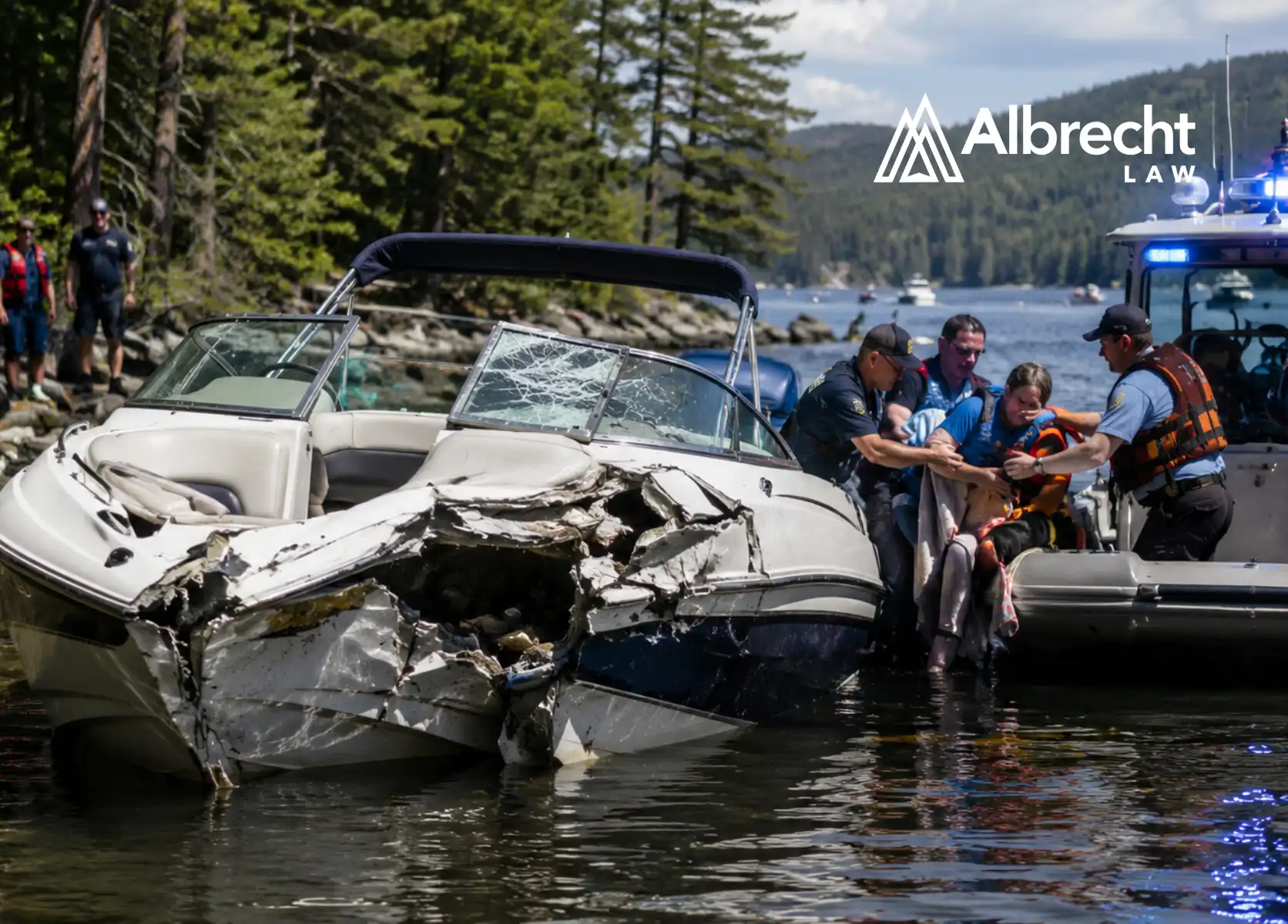
A relaxing day on the water can change in an instant when two boats collide or a vessel strikes a dock, shoreline, or another fixed object. These accidents often don’t stem from one mistake. Instead, operator inattention, unsafe speed, alcohol use, changing water conditions, or several contributing factors may combine to create a dangerous situation.
What causes most boat collisions? According to the U.S. Coast Guard’s 2024 Recreational Boating Statistics, operator inattention was the leading known contributing factor in recreational boating accidents nationwide, followed by improper lookout and operator inexperience.
If you or a loved one has been injured in a boating accident in Spokane or elsewhere in Eastern Washington, identifying the cause of the collision is often the first step toward determining whether another person or organization may be responsible for your injuries.
At a Glance
- Operator inattention is the leading known contributing factor in recreational boating accidents.
- Improper lookout, operator inexperience, excessive speed, and alcohol use also contribute to many collisions.
- Boat collisions may involve another vessel or a fixed object, such as a dock, bridge, or shoreline.
- More than one party may share responsibility for the same boating accident.
- Photographs, witness statements, accident reports, and electronic data may explain what happened.
- Washington law requires certain boating accidents to be reported.

How the Cause of a Boat Collision Affects Your Case
Identifying what caused a boat collision is often one of the first steps in evaluating an insurance claim or personal injury lawsuit. Although some accidents have a single obvious cause, many involve several contributing factors. For example, one operator may have been traveling too fast while another failed to maintain a proper lookout, or mechanical problems and changing weather conditions may have also contributed.
Determining how a collision occurred can support investigators, insurance companies, and attorneys as they identify potentially responsible parties and evaluate whether someone failed to operate or maintain a vessel safely. The evidence collected after an accident helps reconstruct the events leading up to the collision.
Because boating accidents rarely happen for just one reason, investigators typically examine each contributing factor before reaching conclusions about liability. The most common causes of boat collisions offer a starting point for seeing how these accidents occur and how responsibility may ultimately be determined.
Common Causes of Boat Collisions
Boat collisions often occur due to a combination of contributing factors rather than a single mistake. Although each accident is different, the following causes are among the most common factors investigators examine when determining how a collision occurred.
Operator Inattention
Operator inattention contributed to 551 reported recreational boating accidents in 2024, making it the leading known contributing factor nationwide.
Unlike driving on a highway, boating requires operators to monitor activity in every direction. Other vessels, swimmers, paddleboarders, floating debris, changing weather, and shoreline hazards may appear with little warning.
Distractions that can affect a boat operator include:
- Talking with passengers
- Using a cellphone
- Fishing
- Adjusting electronics
- Eating or drinking
- Watching someone being towed
- Attempting to troubleshoot equipment
Even looking away for a few seconds may leave too little time to avoid another vessel or a fixed object.
After a boating accident, investigators may examine witness statements, photographs, onboard electronics, and other evidence to determine whether the operator was distracted or failed to pay adequate attention to the surrounding water.
Improper Lookout
Maintaining a proper lookout is one of every boat operator’s primary responsibilities. Operators should continually scan the surrounding water for:
- Other vessels
- Swimmers
- Paddlecraft
- Floating debris
- Navigation markers
- Docks
- Shoreline hazards
- Changes in traffic patterns
In 2024, improper lookout contributed to 464 boating accidents, 24 deaths, and 348 injuries. Although improper lookout and operator inattention are closely related, they are not identical. A person may be focused on steering while failing to monitor vessels or hazards approaching from another direction. Passengers, boating equipment, glare, darkness, and changing weather conditions may also reduce visibility.
When operators cannot clearly see the surrounding water, they may need to reduce their speed, reposition passengers, or take other steps to improve visibility and avoid a collision.
Operator Inexperience
Operating a boat safely involves much more than steering and accelerating. New or infrequent boat operators may misjudge distances, react too slowly, or underestimate how much time and distance a vessel needs to turn or slow down.
Inexperienced operators may also have difficulty:
- Estimating another vessel’s speed
- Reading changing water conditions
- Applying navigation rules
- Responding to emergencies
- Maneuvering in crowded waterways
- Controlling an unfamiliar vessel
Operator inexperience contributed to 436 boating accidents, 42 deaths, and 213 injuries in 2024.
Unlike passenger vehicles, boats don’t have brakes. Wind, current, waves, momentum, weight distribution, and vessel design all affect how quickly a boat can slow down or change direction. An operator who recognizes danger too late may not have enough time or distance to avoid a collision.
Completing a boating safety course and becoming familiar with how a particular vessel handles can help operators recognize hazards and respond more effectively when conditions change.
Excessive or Unsafe Speed
Speed affects every aspect of operating a boat, including how quickly the operator can react, stop, or change course. While Washington does not impose a universal speed limit for all waterways, boat operators must travel at a speed that is reasonable for the conditions.
Excessive speed can become particularly dangerous when operators encounter:
- Heavy boat traffic
- Swimmers or paddlecraft
- Narrow channels
- Reduced visibility from fog or darkness
- Large wakes
- Changing weather
- Floating debris
Traveling too fast reduces the amount of time available to recognize hazards and avoid a collision. It also increases the force of impact when a crash occurs, making serious injuries more likely.
Investigators often examine witness statements, GPS data, electronic navigation systems, photographs, and the extent of vessel damage when determining whether speed contributed to a boating accident.
Alcohol Use
Alcohol remains one of the leading contributors to fatal boating accidents. Unlike driving a passenger vehicle, boating exposes operators to sun, wind, vibration, and constant motion, all of which can increase fatigue and amplify alcohol’s effects.
Alcohol may impair a boat operator’s:
- Judgment
- Balance
- Coordination
- Reaction time
- Vision
- Ability to recognize hazards
Even small amounts of alcohol may reduce an operator’s ability to safely control a vessel or respond to changing conditions.
Washington prohibits operating a vessel while under the influence of alcohol or drugs. A violation may lead to criminal penalties while also serving as important evidence in a civil injury claim.

Failure to Follow Navigation Rules
Many boat collisions occur because one or more operators fail to follow established navigation rules, sometimes called the “Rules of the Road” for boaters.
These rules help determine which vessel has the right-of-way, how boats should safely pass one another, and what operators should do when approaching another vessel head-on or crossing paths.
Common navigation-rule violations include:
- Failing to yield when required
- Crossing directly into another vessel’s path
- Making unsafe turns
- Passing too closely
- Ignoring navigation markers
- Operating on the wrong side of a channel
Even if both operators make mistakes, each person’s actions may be examined to determine whether they contributed to the collision.
Equipment or Machinery Failure
Although human error accounts for many boating accidents, mechanical problems can also lead to serious collisions.
Examples include:
- Steering failures
- Engine malfunctions
- Throttle problems
- Electrical failures
- Broken navigation lights
- Defective fuel systems
Some equipment failures result from inadequate maintenance, while others may involve manufacturing defects or faulty repairs.
Investigators often inspect the vessel itself, maintenance records, repair history, and damaged components to determine whether mechanical failure contributed to the accident.
Environmental Conditions
Even experienced boat operators must adapt to changing conditions on the water. Wind, waves, current, rain, glare, and reduced visibility can all increase the likelihood of a collision.
Environmental factors may include:
- High winds
- Rough water
- Strong currents
- Dense fog
- Heavy rain
- Bright sunlight or glare
- Floating logs or other debris
Even though weather and water conditions may contribute to an accident, operators are expected to recognize hazardous conditions and adjust their speed and operation accordingly.
Although many boating accidents result from operator error or changing conditions, Washington law establishes important rules that help promote safe vessel operation and reduce the likelihood of collisions.
Washington Boating Laws
Washington has adopted laws designed to promote safe boating and reduce the risk of collisions. Although these laws cannot prevent every accident, they establish important responsibilities for boat operators before and during every trip.
Some of the most important Washington boating laws include:
- Boater Education Card: Most operators born on or after January 1, 1955, must carry a Washington Boater Education Card when operating a motorized boat with 15 horsepower or more.
- Operating Under the Influence: Washington prohibits operating a vessel while under the influence of alcohol or drugs. Boating under the influence (BUI) may result in criminal penalties and can also become important evidence in a civil injury claim.
- Safe Speed: Rather than imposing one statewide speed limit for all waterways, Washington requires operators to travel at a speed that is reasonable and prudent for existing conditions, including weather, visibility, boat traffic, and proximity to swimmers or other vessels.
- Navigation Rules: Boat operators must follow federal navigation rules governing right-of-way, passing, overtaking, and meeting other vessels. These rules are intended to reduce the likelihood of collisions on the water.
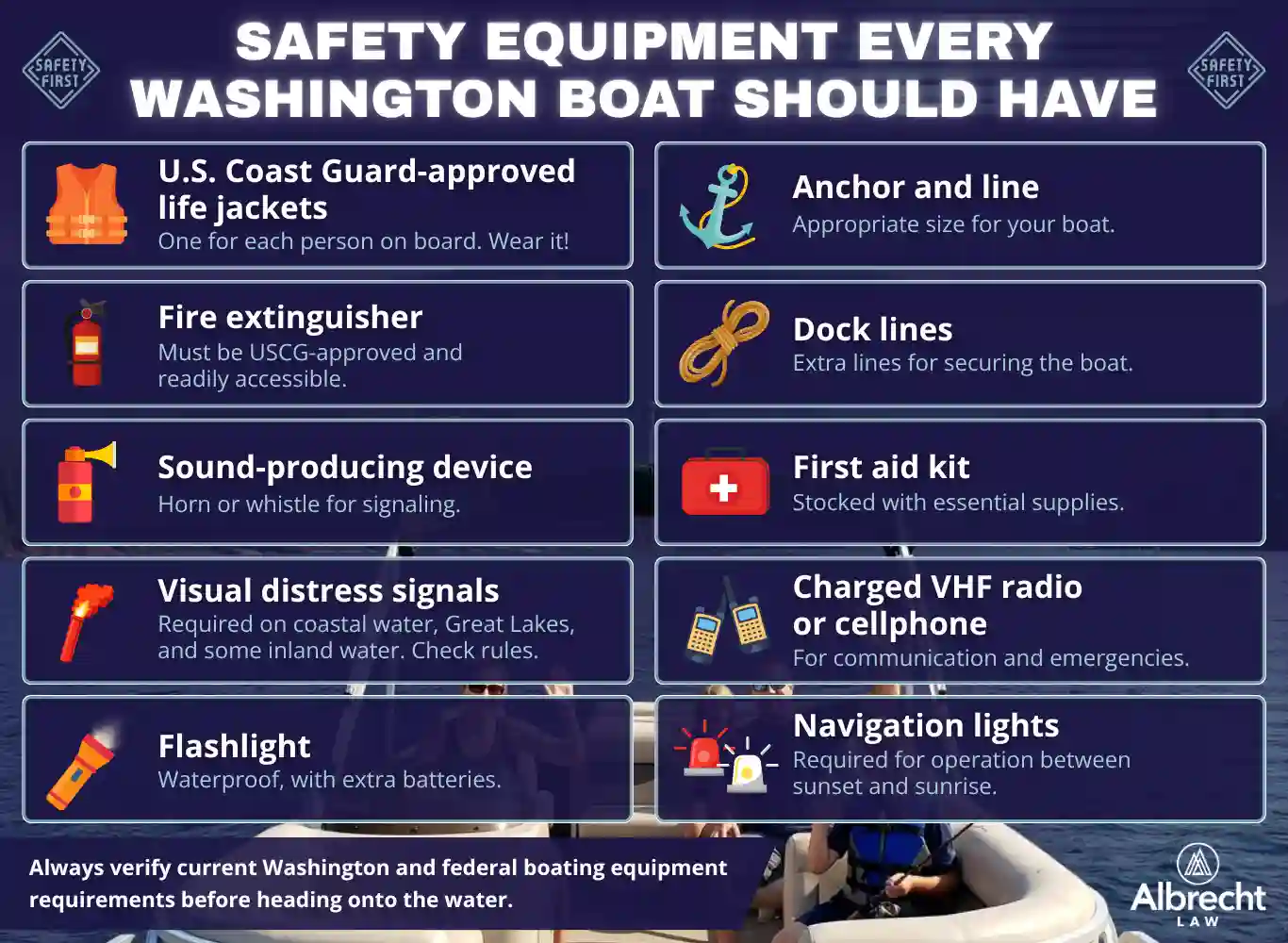
- Required Safety Equipment: Washington law requires many recreational boats to carry safety equipment such as properly sized life jackets, navigation lights, fire extinguishers, and sound-producing devices, depending on the type and size of the vessel.
Violating a boating law does not automatically mean someone caused a collision. However, investigators, insurance companies, and courts may consider whether a violation contributed to the accident when determining liability. Knowing these legal responsibilities is one thing; applying them safely on the water is another.
How Liability Is Determined After a Boat Collision
Not every boating accident is straightforward. In some cases, one operator clearly caused the collision. In others, multiple people, or even a boat manufacturer or rental company, may share responsibility. Determining liability requires a careful review of the evidence and the circumstances leading up to the accident.
Potentially responsible parties may include:
- Another boat operator
- The owner of the vessel
- A rental company
- A tour operator
- A marina
- A maintenance or repair company
- A boat or equipment manufacturer
Washington follows a pure comparative fault system. This means more than one party may share responsibility for a boating accident. If an injured person is found partially responsible, their financial recovery may be reduced by their percentage of fault rather than eliminated altogether.
For example, one boat operator may have been traveling too fast while another failed to maintain a proper lookout. Investigators, insurance companies, or a jury may assign each party a percentage of responsibility based on the available evidence. Because every accident is unique, determining liability often requires a detailed investigation.
What Compensation May Be Available?
The financial impact of a serious boating accident can extend far beyond the initial medical bills. Depending on the facts of the case, an injured person may be able to pursue compensation for both economic and noneconomic losses.
Potential damages may include:
- Medical expenses
- Future medical treatment
- Lost wages
- Reduced earning capacity
- Property damage
- Physical pain
- Emotional distress
- Permanent disability
- Loss of enjoyment of life
The compensation available depends on the specific facts of each case, the severity of the injuries, and the evidence supporting the claim.
Evidence That May Help Prove What Happened
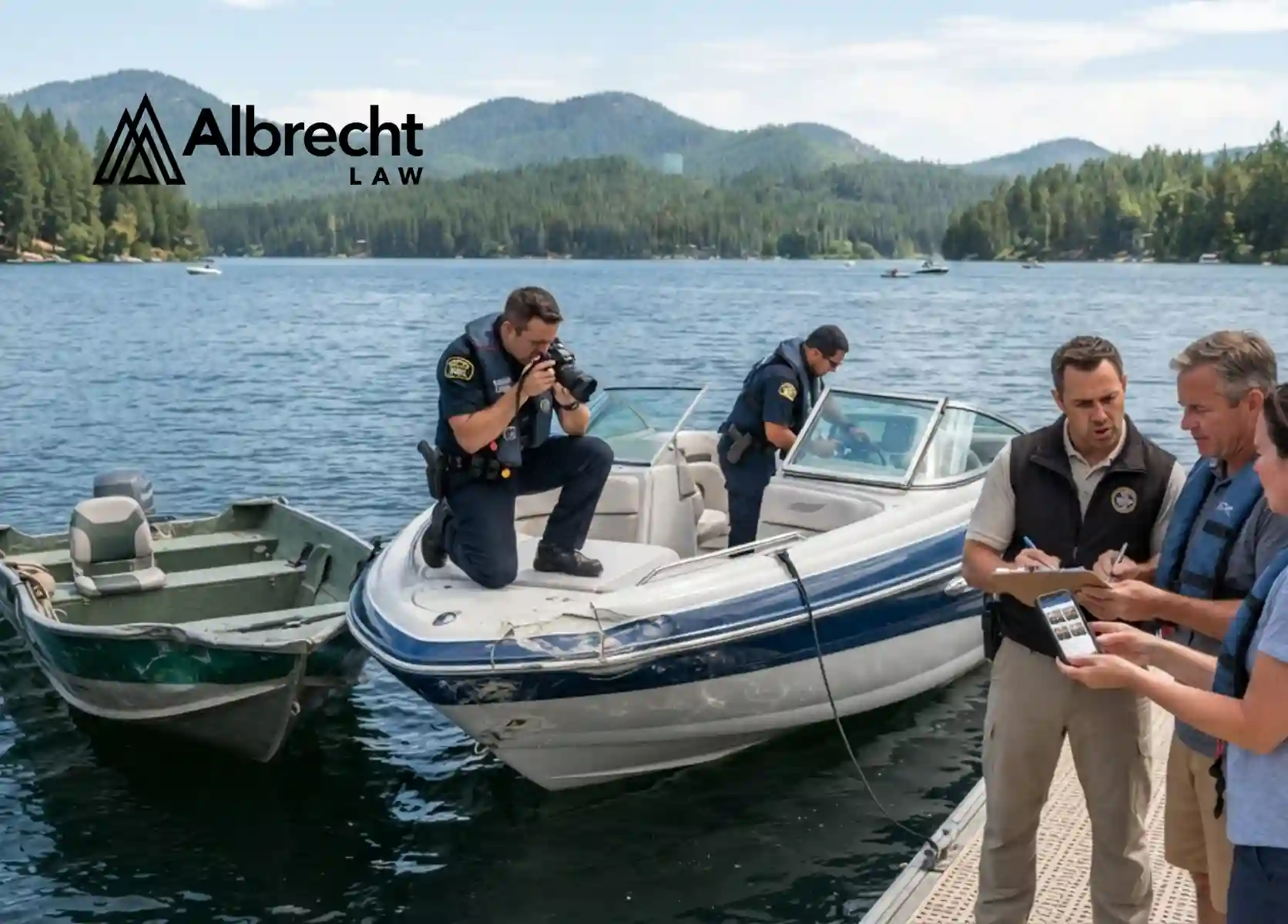
The evidence collected shortly after a boating accident often plays an important role in determining how the collision occurred.
Depending on the circumstances, evidence may include:
- Photographs and videos of the accident scene
- Damage to the vessels
- Witness statements
- Law enforcement or marine patrol reports
- Weather and water condition records
- GPS or navigation system data
- Cellphone photographs or recordings
- Surveillance footage from nearby marinas or businesses
- Maintenance and inspection records
- Alcohol or drug test results, when available
Some newer vessels also contain electronic systems that record operating information before or during an accident. Although boats do not typically have “black boxes” like commercial aircraft, GPS units, chartplotters, engine monitoring systems, and other onboard electronics may preserve valuable information about speed, heading, engine operation, and location.
Knowing what to do after a boating accident may help preserve important evidence while protecting your legal interests in the hours and days following a collision.
Steps to Take After a Boating Accident
The moments after a boating accident can be confusing and stressful. Taking appropriate steps may help protect your safety while preserving important information about what happened.
If you are involved in a boating accident, consider the following:
- Check for injuries. Make sure everyone aboard is accounted for and provide emergency assistance if it is safe to do so.
- Contact emergency responders. Call 911 or request assistance if anyone is injured, missing, or in immediate danger.
- Move to a safe location when possible. If the vessel can be moved safely without creating additional danger, take steps to reduce the risk of another collision.
- Exchange information. Obtain the names, contact information, vessel registration numbers, and insurance information of the other operators involved.
- Document the accident scene. Photograph the vessels, visible damage, injuries, weather conditions, navigation markers, and anything else that may help explain how the collision occurred.
- Identify witnesses. If anyone saw the accident, ask for their names and contact information before they leave the area.
- Preserve electronic data. Save GPS information, chartplotter data, cellphone photographs, videos, and any other electronic information that may help reconstruct the accident.
- Seek medical attention. Some injuries, including concussions and internal injuries, may not become apparent immediately after a collision.
- Report the accident when required by Washington law. Certain boating accidents must be reported to the appropriate authorities, depending on the circumstances.
- Speak with a boating accident lawyer. An attorney can evaluate the circumstances of the accident, preserve available evidence, identify potentially responsible parties, and explain your legal options.
Taking these steps as soon as possible may make it easier to preserve evidence that could become important during an insurance claim or personal injury lawsuit.
What Injuries Are Common in Boat Collisions?
Boat collisions often involve sudden impacts, falls, or occupants being thrown against hard surfaces or into the water. Even collisions that occur at relatively low speeds can produce serious injuries because boats lack many of the safety features found in passenger vehicles.
Common boating accident injuries include:
- Traumatic brain injuries
- Concussions
- Spinal cord injuries
- Neck and back injuries
- Broken bones
- Lacerations
- Internal injuries
- Burns
- Drowning and near-drowning injuries
- Soft tissue injuries
Some injuries do not appear immediately after an accident. Seeking prompt medical evaluation may help identify injuries before they become more serious while also creating medical documentation related to the collision.
Do You Need a Spokane Boating Accident Lawyer If You Were in a Boating Accident?
Boating accident cases often involve unique legal and factual issues that differ from typical motor vehicle collisions. Determining what happened may require reviewing navigation rules, vessel operation, maintenance records, electronic data, witness statements, and applicable state or federal laws.
An attorney may assist by:
- Investigating the accident
- Preserving available evidence
- Identifying potentially responsible parties
- Communicating with insurance companies
- Calculating damages
- Negotiating a settlement
- Preparing the case for trial if necessary
Taking prompt action may also improve the likelihood of preserving evidence before it is lost or destroyed.

How Boater Education Helps Prevent Collisions
Many boating accidents can be prevented through proper education and preparation. Learning how to operate a vessel safely, understanding navigation rules, recognizing hazards, and responding to emergencies each help to reduce the likelihood of collisions.
Washington requires many recreational boat operators to carry a Washington Boater Education Card. To obtain the card, operators must complete an approved boating safety course covering subjects such as navigation rules, emergency procedures, required safety equipment, and responsible vessel operation.
While completing a safety course cannot eliminate every risk, education helps operators develop the knowledge and judgment needed to make safer decisions on the water. It can also help reduce the types of mistakes that contribute to many recreational boating accidents each year.
For more information about Washington’s boating education requirements, visit the Washington State Parks Boater Education Program.
Frequently Asked Questions
What is the most common cause of boat collisions?
Operator inattention is the leading known contributing factor in recreational boating accidents, according to the U.S. Coast Guard’s 2024 Recreational Boating Statistics. Other common causes include improper lookout, operator inexperience, excessive speed, alcohol use, navigation-rule violations, equipment failure, and hazardous environmental conditions.
Who can be held responsible for a boating accident?
Liability depends on the facts of the accident. Potentially responsible parties may include another boat operator, the vessel owner, a rental company, a marina, a maintenance provider, or a boat or equipment manufacturer. In some cases, more than one party may share responsibility for the collision.
How long do I have to file a boating accident lawsuit in Washington?
The deadline for filing a boating accident lawsuit depends on several factors, including the nature of the claim and the parties involved. Because legal deadlines vary and exceptions may apply, speaking with a Spokane boating accident lawyer as soon as possible can help preserve your ability to pursue a claim.
What should I do after a boat collision?
Your safety should come first. Seek medical attention for anyone who may be injured, contact emergency responders if necessary, report the accident when required by Washington law, exchange information with the other parties involved, and document the scene by taking photographs and gathering witness contact information if it is safe to do so. Avoid repairing or disposing of damaged equipment until it has been documented.
Can I recover compensation if I was partially at fault?
Washington follows a pure comparative fault system. If you are found partially responsible for a boating accident, your potential compensation may be reduced by your percentage of fault rather than automatically barred. Each case depends on its specific facts and the available evidence.
Contact Albrecht Law After a Spokane Boating Accident
A boating accident can leave you facing painful injuries, mounting medical bills, and uncertainty about what comes next. Determining why the collision occurred and who may be legally responsible often requires a thorough investigation and careful review of the available evidence.
At Albrecht Law PLLC, our attorneys have represented injured people throughout Washington for decades and understand the unique issues that can arise in boating accident cases. We take the time to investigate the circumstances surrounding your accident, identify potentially responsible parties, and pursue the compensation available under Washington law. Throughout the process, we provide the personalized attention that has become a hallmark of our firm.
Founding Attorney Matt Albrecht has argued cases before the Washington State Supreme Court, and that appellate experience helps shape the thoughtful preparation and legal strategy the firm brings to every case. When insurance companies fail to handle claims fairly, our Spokane boating accident lawyers pursue each available remedy under Washington law, including bad-faith insurance claims when appropriate.
Call (509) 495-1246(509) 495-1246 or contact Albrecht Law PLLC through the confidential online form to schedule your free consultation to discuss your legal options. Our firm represents injured clients throughout Spokane County, Spokane Valley, and Eastern Washington.
Albrecht Law PLLC – Our Clients Are More Than Just Cases
Copyright © 2026. Albrecht Law PLLC. All rights reserved.
The information in this blog post (“post”) is provided for general informational purposes only and may not reflect the current law in your jurisdiction. No information in this post should be construed as legal advice from the individual author or the law firm, nor is it intended to be a substitute for legal counsel on any subject matter. No reader of this post should act or refrain from acting based on any information included in or accessible through this post without seeking the appropriate legal or other professional advice on the particular facts and circumstances at issue from a lawyer licensed in the recipient’s state, country, or other appropriate licensing jurisdiction.
Albrecht Law PLLC
5105 E. 3rd Avenue, Suite 101
Spokane Valley, WA 99212
(509) 495-1246(509) 495-1246
https://albrechtlawfirm.com/
Schedule A Free
Consultation Today
No Fee Unless You Win
Call (509) 495-1246(509) 495-1246, or fill out the short form. Don’t hesitate, your questions are welcome.
Required Fields*
Your Information Is Safe With Us
For more information on how your data will be handled, Please Visit Privacy Policy. The information you provide will be used to answer your question or to schedule an appointment if requested.
Related Blog Posts
How to File an Allstate Accident Claim After a Car Crash in Spokane, WA
A car accident sets off a chain of events that doesn’t stop once you leave the scene. Medical appointments pile up, bills start arriving, and calls from the insurance company…
Albrecht Law PLLC Secures Major Appellate Victory in a Personal Injury Case
SPOKANE VALLEY, Washington — Albrecht Law, PLLC, a premier civil trial and appeal law firm, is proud to announce a significant legal victory at the Washington State Court of Appeals,…

Is Lyft Safer Than Uber in Spokane, Washington?
When a rideshare trip ends in a collision, many Spokane riders replay the moment and wonder whether choosing a different service could have changed the outcome. Residents rely on Uber…
Auto Accident Settlement Timeline in Spokane, Washington: What You Need to Know
A serious car accident in Spokane rarely feels like a one-day event. The crash is over in seconds, but the impact lingers weeks or months later when you’re still dealing…